PROMO!

First order? Get 10% OFF with this code: 1storder

Research hub

HCG Research Hub

Human chorionic gonadotropin (HCG) is a glycoprotein hormone consisting of two protein subunits (an alpha and a beta) which are held together by non-covalent interactions.

  • Glycoprotein hormone
  • Gonadotropins
01

Technical Overview

Human chorionic gonadotropin (HCG) is a glycoprotein hormone consisting of two protein subunits (an alpha and a beta) which are held together by non-covalent interactions. Both subunits contain carbohydrate groups so it's a more complex molecule than a typical single chain peptide.

HCG is a gonadotrophin and shares its alpha subunit with LH, FSH and TSH. The beta subunit is what differentiates it from the others.

Laboratory research has examined HCG's molecular structure, glycosylation and interaction with the luteinizing hormone/chorionic gonadotropin receptor (LHCGR). Its subunit arrangement and carbohydrate composition are also relevant to investigations of glycoprotein chemistry and molecular characterization.

02

Chemical Classification

Chemical name
Human chorionic gonadotropin
Common name(s)
HCG, hCG
Compound classification
Glycoprotein hormone
Hormone family
Gonadotropins
Molecular structure
Non-covalently associated alpha and beta subunits
Molecular formula
No single fixed molecular formula for intact glycosylated HCG
Approximate molecular weight
38 kDa, dependent on glycosylation
CAS number
9002-61-3
Primary receptor
Luteinising hormone/chorionic gonadotropin receptor (LHCGR)
03

Molecular Characteristics

HCG is made up of two polypeptide subunits which associate to form a heterodimer. The alpha subunit contains 92 amino acids and is common to the other glycoprotein hormones. The beta subunit (145 residues) is the one that gives HCG its distinctive structural properties.

Disulfide bonds help maintain the three-dimensional structure of HCG's two subunits. The beta subunit also features a characteristic cystine-knot arrangement that contributes to its molecular shape.

Both subunits contain N-linked carbohydrate chains, with additional O-linked carbohydrates found in the C-terminal region of the beta subunit. These influence the hormone's molecular mass, charge and other physicochemical properties.

The carbohydrate content can vary between HCG preparations and as a result there are different glycoforms. HCG therefore cannot be assigned one definitive molecular formula or one exact molecular weight. The variation in the carbohydrate content has to be borne in mind when looking at the molecular make up of the hormone.

04

Mechanism Under Investigation

HCG is recognized as a ligand of the luteinizing hormone/chorionic gonadotropin receptor (LHCGR), a member of the G protein-coupled receptor (GPCR) superfamily.

The receptor contains a large extracellular domain involved in hormone recognition, together with a transmembrane region associated with intracellular signal transmission. Molecular investigations have examined how the structural features of HCG influence its interaction with these receptor domains.

HCG and LHCGR Binding

HCG interacts with the extracellular region of LHCGR through contacts involving its glycoprotein structure. Receptor-binding investigations have examined the contribution of individual amino-acid residues, subunit arrangement and hormone conformation to molecular recognition.

The HCG/LH structural relationship is of particular relevance to this work. Both hormones bind to LHCGR but the differences in their beta subunits and glycosylation patterns offer the opportunity to look at differences in ligand-receptor interaction.

G Protein and cAMP Signaling

LHCGR is principally associated with Gs-mediated signaling. Receptor activation can promote the activity of adenylyl cyclase, an enzyme involved in the conversion of ATP to cyclic adenosine monophosphate (cAMP).

In biochemical signaling systems, cAMP acts as a second messenger and can regulate downstream proteins, including protein kinase A (PKA).

Laboratory investigations of this pathway may involve receptor-binding measurements, adenylyl cyclase activity assays and quantitative analysis of intracellular cAMP.

Additional Signaling Pathways

Beyond the main Gs/cAMP pathway, research into LHCGR signaling has looked at other molecular pathways including those associated with phospholipase C and the mitogen-activated protein kinase (MAPK) pathway.

ERK1/2 phosphorylation is one example of a measurable biochemical event associated with GPCR signaling investigations.

The relationship between receptor conformation, ligand recognition and downstream signaling remains an area of molecular research. Different experimental conditions and receptor systems can influence the signaling responses recorded.

This summary reflects findings reported in published preclinical and in vitro research. The original studies supporting this information are listed in the references.

05

Experimental Research Areas

01

Glycoprotein Structure and Subunit Organization

The heterodimeric architecture of HCG provides a basis for investigating glycoprotein assembly and molecular stability.

Research in this area includes structural comparison of the alpha and beta subunits, analysis of disulfide bonding and examination of the molecular interactions responsible for maintaining the assembled hormone.

02

Glycosylation and Molecular Heterogeneity

HCG contains several carbohydrate attachment sites, making it relevant to glycoprotein glycosylation research.

Analytical investigations have examined differences in N-linked and O-linked glycan structures, carbohydrate composition and the physicochemical characteristics of individual glycoforms.

These differences can influence the behavior of HCG during chromatographic separation and other analytical procedures.

03

Hormone-Receptor Recognition

HCG-LHCGR interactions have been investigated using biochemical binding techniques and molecular receptor systems.

Particular areas of interest include ligand affinity, receptor recognition sites and the structural requirements associated with hormone binding.

Comparisons with related glycoprotein hormones can also help characterize the molecular features involved in receptor specificity.

04

Intracellular Signaling

LHCGR-associated signaling provides a framework for investigating GPCR-mediated biochemical processes.

Experimental measurements may include cAMP formation, adenylyl cyclase activity, protein phosphorylation and other defined molecular endpoints.

These investigations are concerned with the biochemical events associated with receptor activation rather than therapeutic outcomes.

05

Analytical Glycoprotein Chemistry

The molecular complexity of HCG creates several challenges for analytical characterization.

Its two-subunit structure, carbohydrate content and variation between glycoforms require methods capable of examining more than molecular mass alone.

Research in this area includes chromatographic separation, protein characterization, glycan profiling and comparison of analytical assay performance.

06

Analytical Verification

Analytical HPLC can be used to assess the chromatographic characteristics and purity of an HCG preparation. Mass spectrometry (MS) provides information about molecular mass and can help characterize the protein subunits and their glycosylation patterns.

As HCG is a glycoprotein, variations in carbohydrate composition can affect its measured molecular properties. Additional analytical techniques may be required to examine these differences.

A Certificate of Analysis (CoA) records the results of batch-specific testing, including reported purity and other relevant specifications. These findings provide information about the material's identity and composition but do not establish biological activity.

Certificate of Analysis
Batch20250916003
MethodCOA 2025
Document Download PDF
HPLC
Batch20250916003
MethodHPLC 2025
Document Download PDF
07

Storage & Handling

HCG should be stored according to the conditions specified in the product documentation. Lyophilized material should remain sealed and protected from moisture, contamination and unnecessary temperature fluctuations.

When preparing the HCG peptide vial for research, use the right solvents and controlled conditions. Qualified staff should follow proper handling steps and storage rules for each batch.

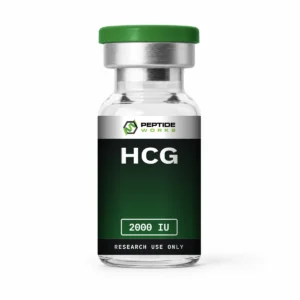
Supplied As Lyophilized Powder in Vial
Storage Store at 2–8°C
Handling Reconstitution Required
08

Questions researchers ask

Human chorionic gonadotropin (HCG) is a glycoprotein hormone composed of two non-covalently associated protein subunits. Biochemical and analytical research has examined its molecular structure and interaction with the LHCGR receptor.

For research and laboratory use only. Not for human or animal consumption.

HCG is supplied exclusively for laboratory research and analytical purposes. This page provides scientific and technical information about the compound and is not intended as guidance on administration or dosing. Nor should it be interpreted as advice on diagnosing, treating or preventing any disease or medical condition.

Available now

HCG Peptide from Peptide Works